For 17 years, I have been on a natural wellness journey that has led me to switch to more non-toxic household products.
I haven’t used a store-bought dryer sheet in years after learning just how horrible they are for people & the planet.
Not to mention the waste factor. I have been aiming to repurpose what we can and go through less waste with our every day products.
For a few years, I have used wool dryer balls in our dryer as a natural solution for softer clothes and less static. Although, I’ll admit, I didn’t see too much of a difference
I’ve also heard amazing things about a balled up piece of aluminum foil in the dryer to help reduce static, though I have never tried it myself (it’s not exactly non-toxic – but that’s a different conversation).
Lately , I have been putting vinegar in my wash cycles as a fabric softener.
I do notice a big difference in our laundry when I use vinegar in the wash. Our clothes come out of the dryer feeling softer and I don’t deal with smells any longer (Moms with teens, this is a game-changer).
However, we do an INSANE amount of laundry as a family of 7 , so we go through a lot of vinegar really quick.
I’ve been trying to figure out a less-waste solution to this problem and then I heard about making homemade dryer sheets using vinegar.
Brilliant!
Why make homemade dryer sheets
Budget-friendly. As a family of 7, cutting costs anywhere that I can makes a huge difference. These dryer sheets are re-usable, so all you need to add is the solution to make a fresh batch. The cost comes out very reasonable!
Eco Friendly. This is a big consideration. Many store-bought dryer sheets (even the natural kind) contain harmful chemicals that leech into waterways and the atmosphere. Dryer vents may introduce harmful airborne compounds called volatile organic compounds (VOCs) into the air, which can impact the environment. Not good. This recipe can cut down on that.
Safe for sensitive skin. The solution used for these dryer sheets is extremely safe, especially if you make it scent-free.
Non-toxic. No harsh chemicals in this dryer sheet recipe. Just good, natural, non-toxic ingredients that work.
This post contains affiliate links that help support the content on callhercrazy.com. All opinions are my own.
DIY Non-toxic dryer sheets recipe
This recipe is super simple to make and natural, which is perfect for babies and those who have sensitive skin.
With this DIY recipe, you can ditch the costly and toxic store-bought dryer sheets for good!
Here’s what you’ll need:
- 1 large jar, between 20-32 ounces
- 1 cup water
- 1 cup white vinegar
- 10-15 cotton fabric scraps or quilting squares.
- 2 tablespoons vegetable glycerin (this helps to make your clothes extra soft)
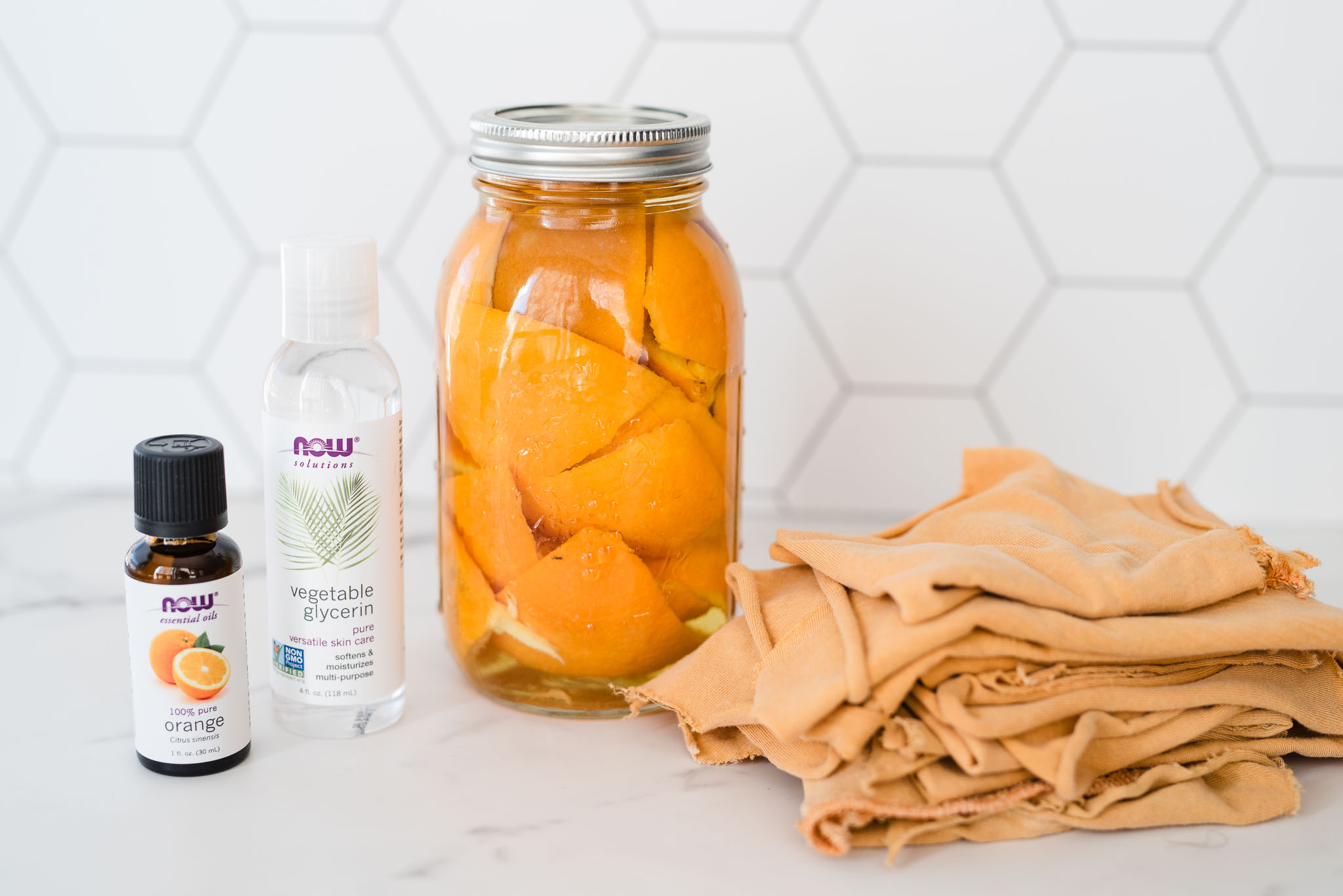
- 12 drops of your favorite essential oil (I use orange oil as I am a sucker for citrus smells)
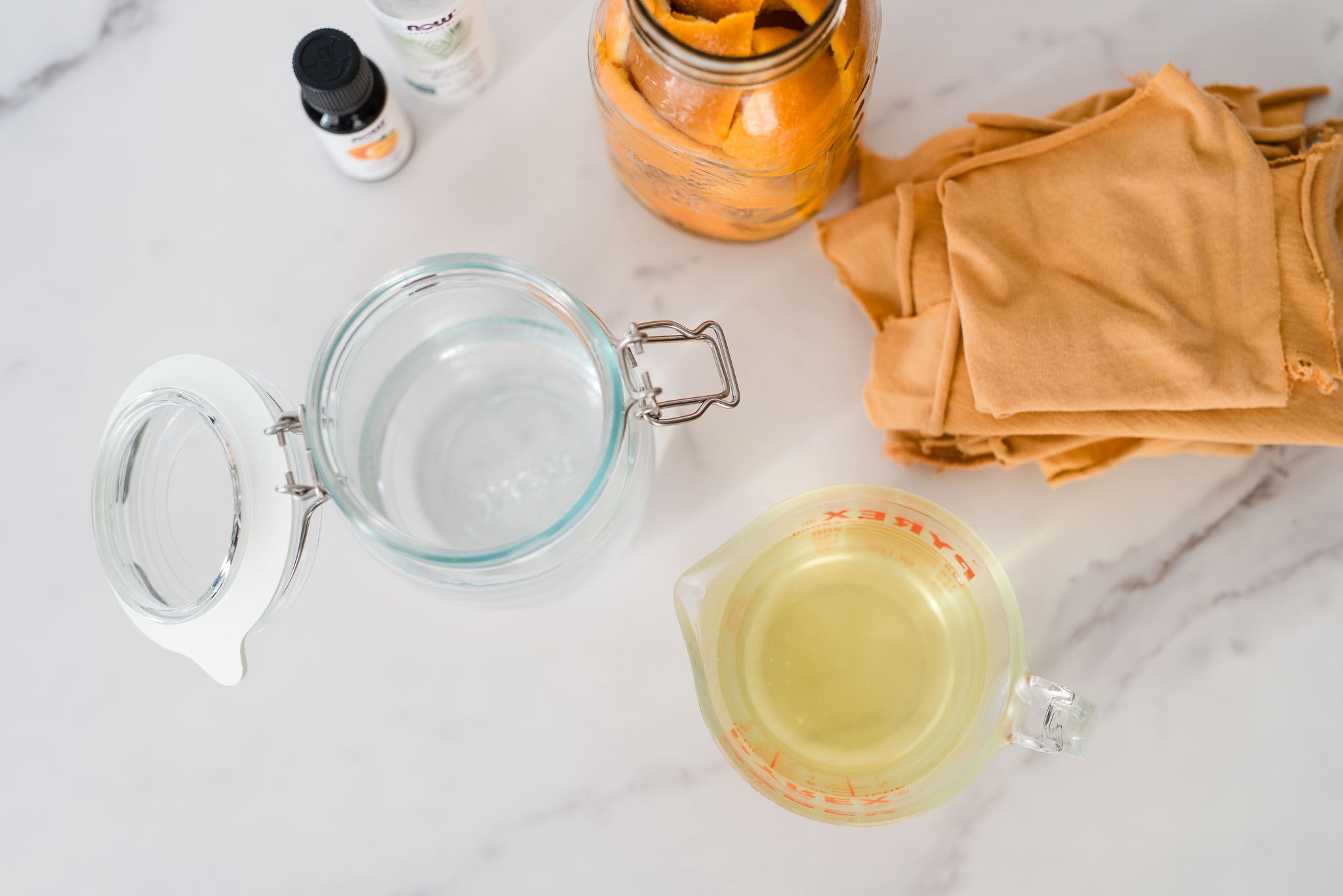
I used a flip top jar that was leftover from a Christmas gift. We get these filled with homemade chex-mix and after it’s gone, they make lovely jars for storing things like this!
For the vinegar, I took it a step further and infused it in orange peels that were leftover from juicing. This is completely optional and why my vinegar looks yellow, but the vinegar comes out smelling much nicer than without.
If you’re wondering, the liquid glycerin is completely optional, but it does help to keep your clothes extra soft. It’s very inexpensive and a little bit goes a long way.
For the actual dryer sheets, you can use any type of cotton fabric. I personally had cut up a few old t-shirts that my kids wore holes through. If you don’t have old shirts lying around, you can buy quilting squares or use washcloths too.
How to make Natural Dryer Sheets
This is so simple, my toddler could do it, but we’ll pass on that for now.
1. Add your water, vinegar, glycerin, and essential oil drops to your jar.
2. Close the jar and shake up really well.
3. Add your cloth scraps & allow them to soak into the solution.
4. If any liquid remains sitting in the jar, pour into an additional jar or container to save for the next batch.
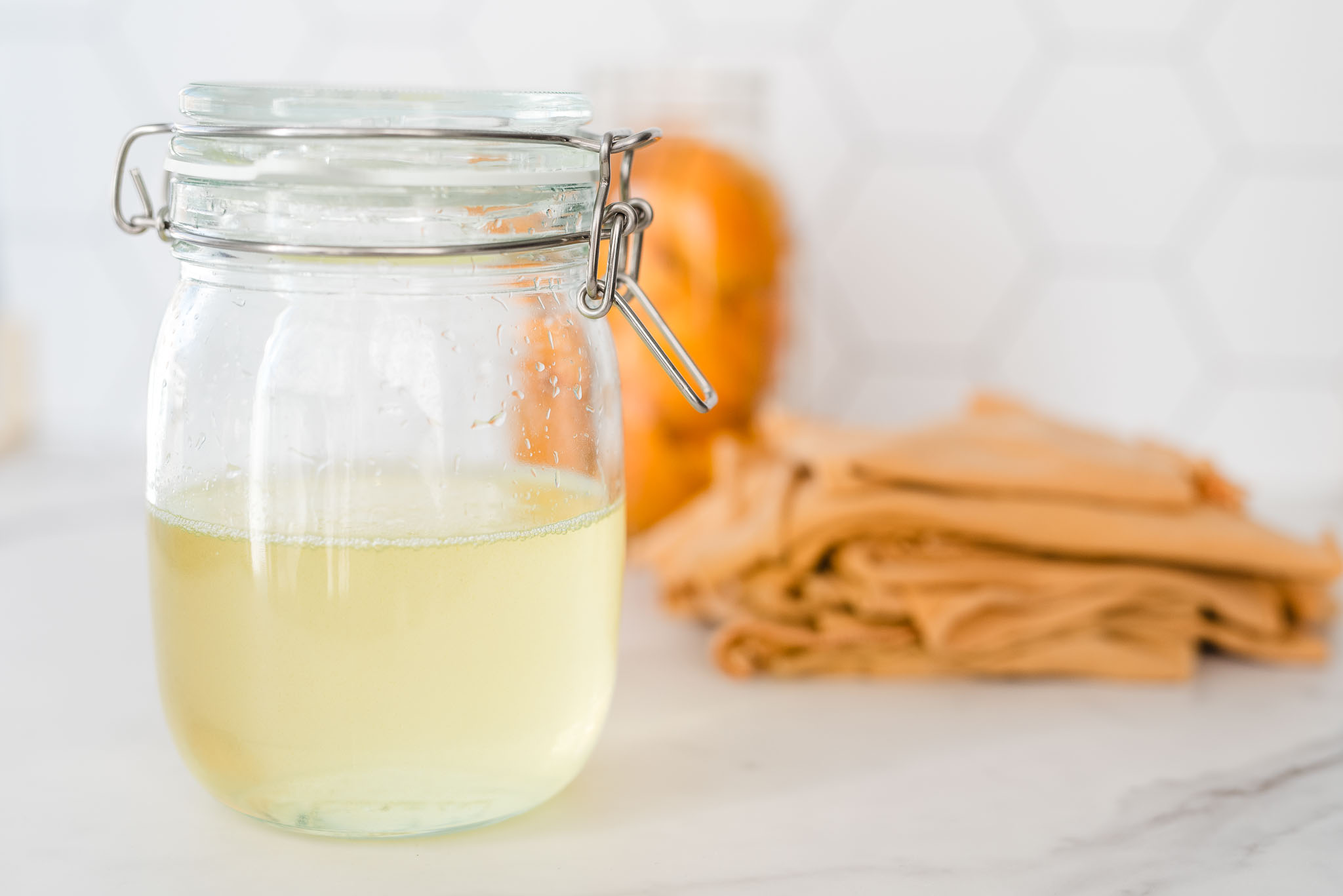
You want your dryer sheets to be wet, but not soaking.
You can either remove some of the liquid from the jar or add more cloths to soak it up if there’s too much.
Removing the extra liquid helps to keep them from being soaked and if there’s enough leftover, you won’t have to make a new batch next time!
Once you have used the dryer sheets, you can add them back to the jar to start over again.
Simply add the solution to the jar again and you’re good to go!
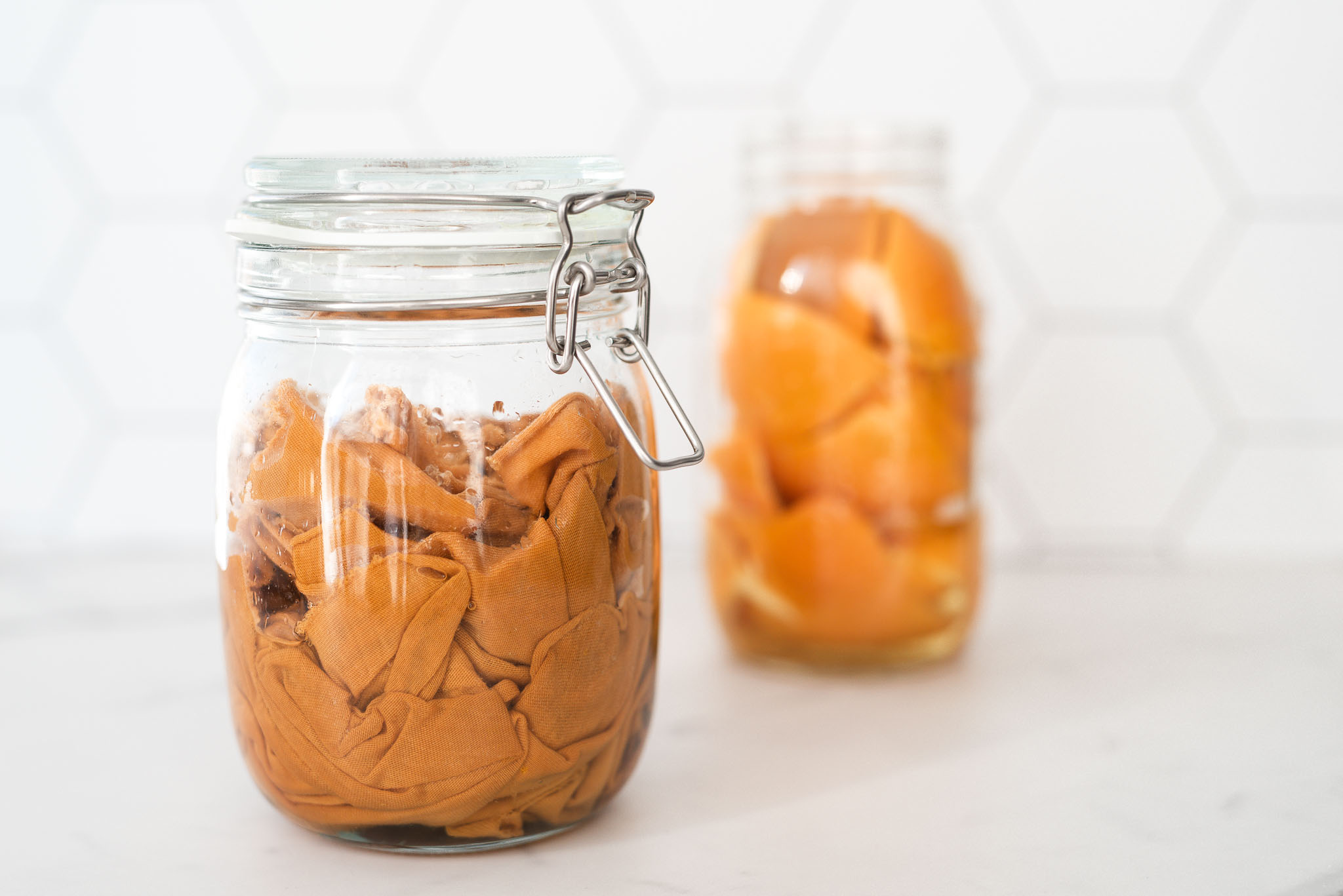
These homemade dryer sheets might not be snuggle, but the natural ingredients make me feel so much better using them!
After you try making your own dryer sheets, make sure to come back and let me know how you like them. I’d love to hear about your experience trying out this DIY recipe!
Cleaning your home doesn’t have to come at the cost of your health or the environment.
These dishwasher pods are proof that simple, low-tox choices can still be effective, affordable, and easy to maintain long-term.
Grab my Crunchy Cleaning Companion or check out my other DIY low-tox recipes where I break down simple changes that protect your health, save money, and make natural living feel doable instead of dramatic
Like this DIY dryer sheets recipe? You might like some of these simple recipes too
Super Easy dishwasher tabs recipe
Hi Heather! I’m on my journey to eliminate as many chemical products in our lives as possible too! I’ve done the aluminum ball idea, but wasn’t satisfied with it in the long run. Now I’m using the wool balls and a clean sock, turn it inside out, make it wet, add a few drops of essential oil of choice, turn it around and throw it in the dryer with the washed clothing, etc.
However, I love this idea you’ve shared here and I’m looking forward to trying it! Thank you. 🙂
I haven’t tried that yet, but that sounds even easier. thanks for sharing!
So do you put the wet dryer sheets into the dryer and then just put them back into the mixture each load?
yes, that’s what I do until the solution has been fully absorbed and then I make more!
I look forward to trying these dryer sheets. We live in a cold very dry climate in the winter, and the dryer balls are not quite cutting it for the static.
However, I would not use aluminum foil. As it gives off toxic fumes when heated. I no longer use it for cooking.
yes, you’re right about that. I’ve never used them in my dryer for this reason
Do your clothes smell like vinegar? I don’t mind it, but hubby hates it when I add it to the wash.
I don’t think so! I am very sensitive to smells and it doesn’t make the clothes smell like it at all
Vinegar usually doesn’t smell once dry. I’ve used in laundry, cleaning, and even for natural deodorant and no smells.
I keep them in the jar with the solution. Because it’s vinegar, it stays fresh
Have the clothes in the jar ever gotten moldy? I would think the vinegar would prevent that, but mold still likes warm wet places so I am just wondering if you have experienced that.
Thanks!
nope! the vinegar keeps it from getting moldy!
Hi Heather, Can I use this recipe when I am softening the clothes that I hang to dry? I hang most of our clothes and put them in the dryer on a moisture sensing cycle. Thank you
you can certainly try! or just add about 1/4 cup of vinegar to your wash
Do you put the vinegar in the washer barrel or in where you put the laundry detergent? I have a front loader
I put it straight in the barrel
Do these leave oil spots on clothes? I am nervous about the vegetable glycerin leaving oil residue on clothes..??
not that I have noticed, but that’s good to keep in mind
I would think the oily gunk they put in the toxic dryer sheets would be even worse. I am looking forward to trying the vegetable glycerin!
I tried these and my dark shirts had oily spots on them. After rereading this my sheets were soaked not just damp. Could that have been the problem?
Oh bummer! I am almost certain that it would be the issue. You can either skip the glycerin altogether, but if you use it, make sure they are wrung out before tossing in the dryer
What brand of liquid glycerin do you use?
I use the NOW brand. They make excellent quality products that are also very affordable. https://amzn.to/4c0BUkv
Hello, thanks for the recipe! I’ve tried it and still find there’s still a lot of static in the dry clothes. Do you have this issue? And thoughts to help me?
I’ve found that when I over-dry my clothes, this happens. If the air is super dry (especially during the winter), try adding a small of vinegar to your wash too.